
Austin Seven
In 1922, Herbert Austin unveiled a small car he had largely designed with an 18-year-old draughtsman, Stanley Edge. His ambition: to offer British families a real car for the price of a motorcycle and sidecar.
Barely 2.70 metres long, the Austin Seven was powered by a 747 cc four-cylinder engine. It was simple, light and economical, while offering four seats and genuine comfort. Its success was immediate: it drove cyclecars off the market and brought the car into countless homes. Produced until 1939, with nearly 300,000 built, it came in countless versions, from saloon to racing open two-seater.
Its influence reached far beyond the United Kingdom. It was built under licence in France by Rosengart, in Germany by Dixi, which became BMW and made it its first car, and in the United States by American Austin, and it inspired the first Datsuns in Japan. It was also on an Austin Seven that Colin Chapman built the first Lotus.
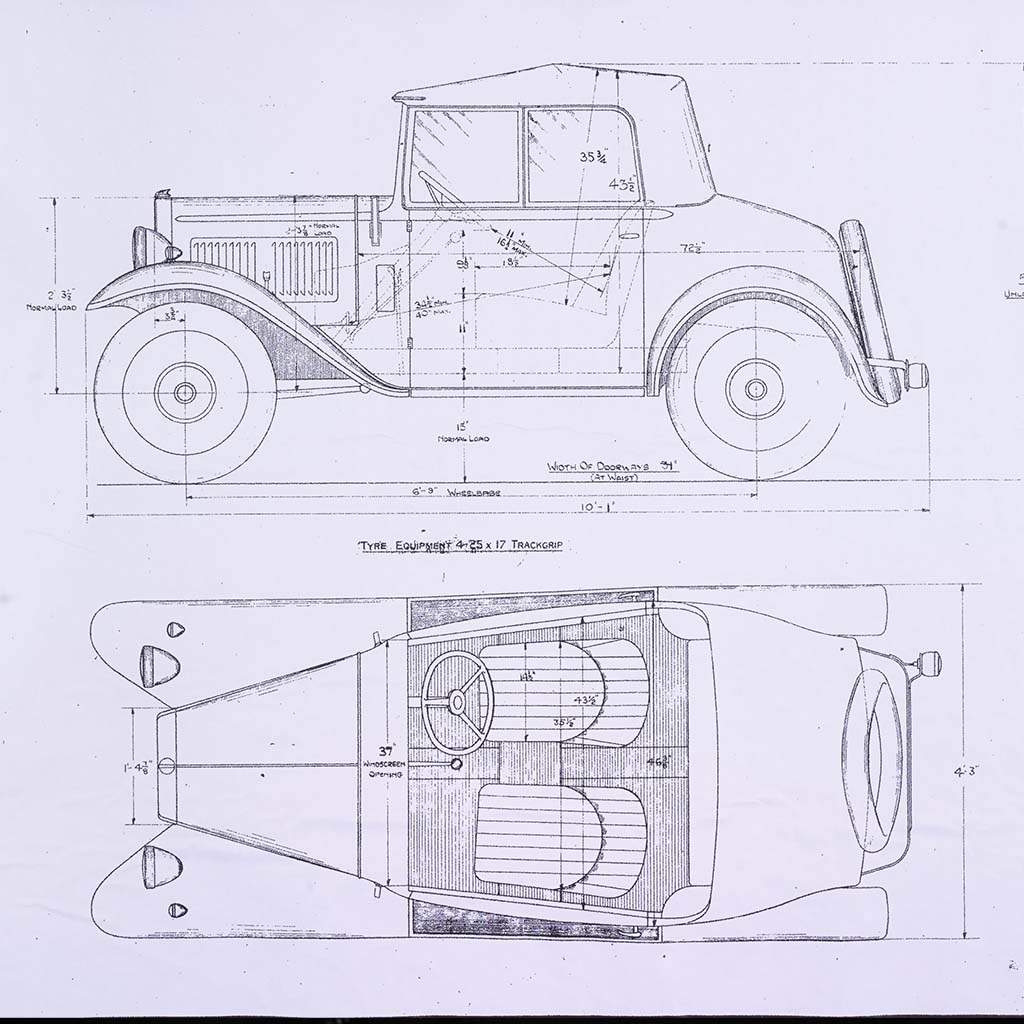
Why this choice?
Come back soon to discover what comes next, follow our blog.
To follow this project, subscribe now to our two YouTube channels and be notified of new releases:
An opinion, an idea, an insight? Leave us a message
Every new adventure needs a manifesto:
“We declare our wish to be free to explore shapes and lines without limits”