
Citroën 2CV
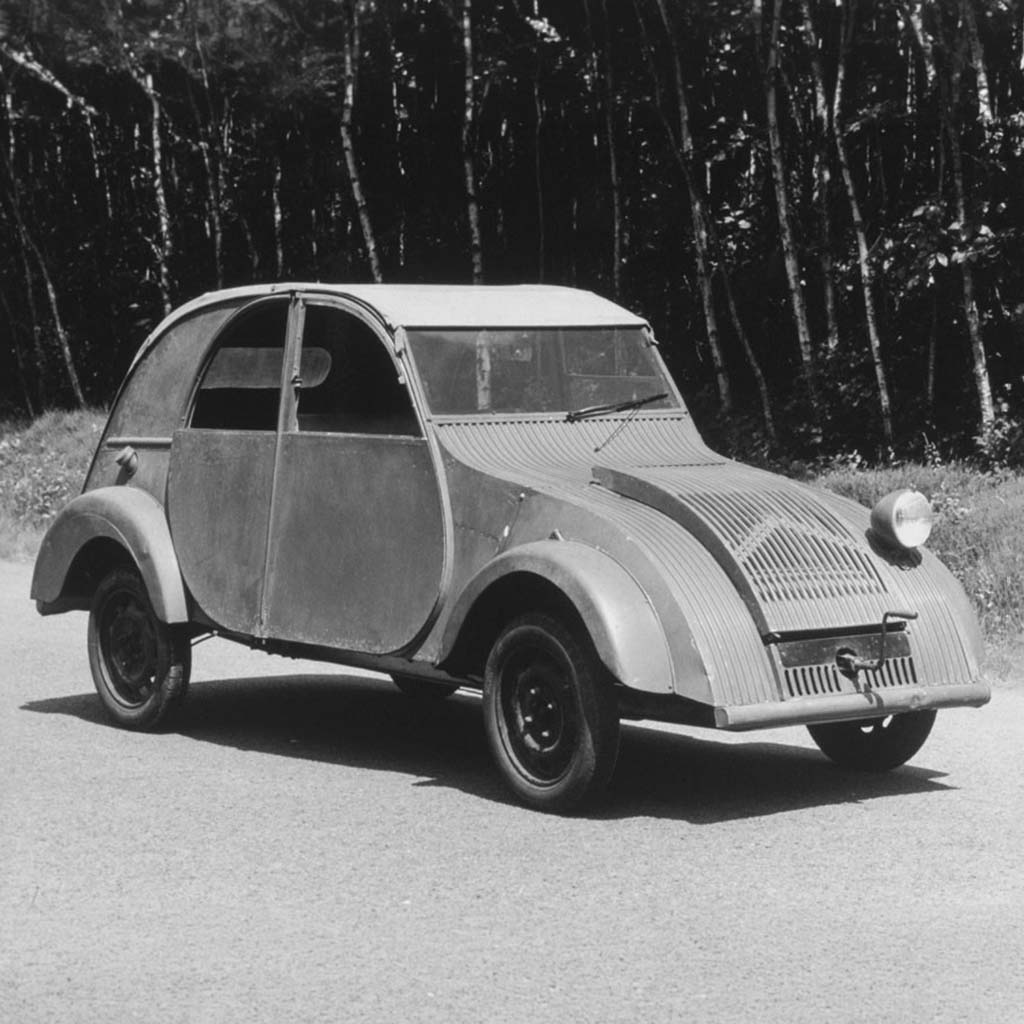
The specification has become famous: a car able to carry two farmers in clogs and fifty kilos of potatoes at 60 km/h, using three litres per hundred kilometres. It had to be able to cross a ploughed field without breaking a basket of eggs placed on the seat.
Conceived as early as 1936 by Pierre-Jules Boulanger, the head of Citroën, it was developed by André Lefèbvre and Flaminio Bertoni. During the Occupation, the prototypes were hidden from the Germans. Unveiled at the 1948 Paris Motor Show, it was at first mocked for its bare-bones look. Yet its small air-cooled twin, very soft suspension and canvas roof make it a car of rare intelligence.
Produced until 1990, with more than 5 million built including its derivatives, the 2CV put rural France on wheels, then became the car of students and travellers. Simple, economical and endearing, it remains a symbol of freedom.
Why this choice?
Come back soon to discover what comes next, follow our blog.
To follow this project, subscribe now to our two YouTube channels and be notified of new releases:
An opinion, an idea, an insight? Leave us a message
Every new adventure needs a manifesto:
“We declare our wish to be free to explore shapes and lines without limits”