
The Road Beneath Our Feet
You can’t think “Automobile” without thinking “road”.
What is a path? And why do we talk about following our own way or leaving our mark?
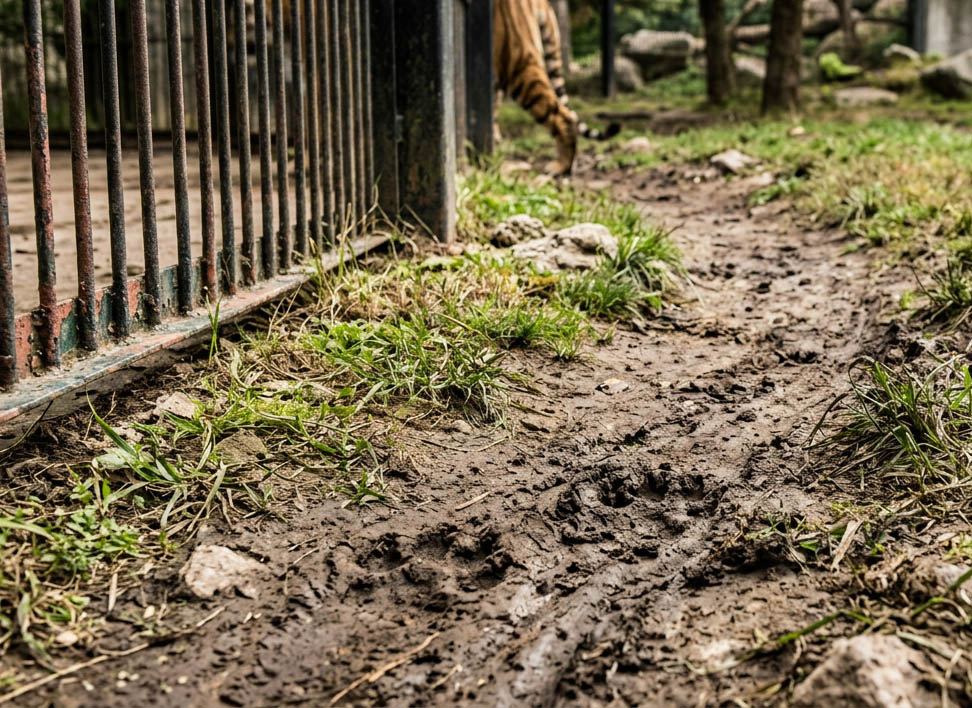
Watching a big cat pace round its cage, you understand better how a path takes on a visible form: the ground is compacted by the energy dissipated by the movement and the animal’s weight.
If the vegetation receives the same solar energy on every square metre, growth is obviously harder and slower where the soil is denser.
The path is thus born of the difference between two opposing “forces”: if a heavy mass moves little, vegetation wins. On the Moon, Neil Armstrong’s footprints cannot disappear because there is no Life.
We must speak of a difference between two identical things because, on Earth, it is essentially solar energy alone that allows both the growth of vegetation and the production of the animal’s food.
A motorway has the same two characteristics. If it is abandoned, vegetation will invade and then destroy it. Building the road surface is also extremely energy-intensive, combining mining, oil extraction and a good deal of heavy loads moved in the form of steamrollers. Bitumen is a hydrocarbon obtained by distilling oil, a product that required not only direct solar energy for the growth of the original living matter, but also temperatures and pressures for its formation, associated rather with the rotation of the planets, gravity, the nature of the Earth’s core, and so on.
If we can understand the origin of the path, its history is also open to us through a rather unexpected route.
It all began at the exhibition “Formes de la ruine” (Forms of Ruin) at the Musée des Beaux-Arts in Lyon. Visitors were greeted by a sketch for a famous painting by Hubert ROBERT, a painter specialising in ruins, a pictorial theme that was often in fashion. The painting is in the Louvre and shows the Louvre’s Grande Galerie in ruins, where only Greek art has survived and still attracts copyists. The sketch shown in Lyon was unusual: while it did show the lush vegetation that comes with ruin, as we have seen, it also showed figures dressed exactly as people were in the painter’s own time, even though the painting was a work of anticipation, and therefore depicted the future.
The painting dates from 1796. Access to energy was still extremely limited. The future certainly included the possibility of a building falling into ruin, but not necessarily the cyclical changes of fashion we know today. You can dive into Michel PASTOUREAU’s studies of colour to see how slowly things changed in those periods. Conversely, in the age of technological progress linked to easy access to energy, from around 1850 onwards, the future meant visible and rapid change.
Although clothes already changed from one era to another, the painter did not see the pictorial relevance of this detail in conveying his message. Unlike the modernist artists of the early twentieth century, who used clothing (jumpsuits, metal) or furniture (tubular, transparent) to visually represent change, and therefore the future.
What could we deduce from this about the history of paths and roads?
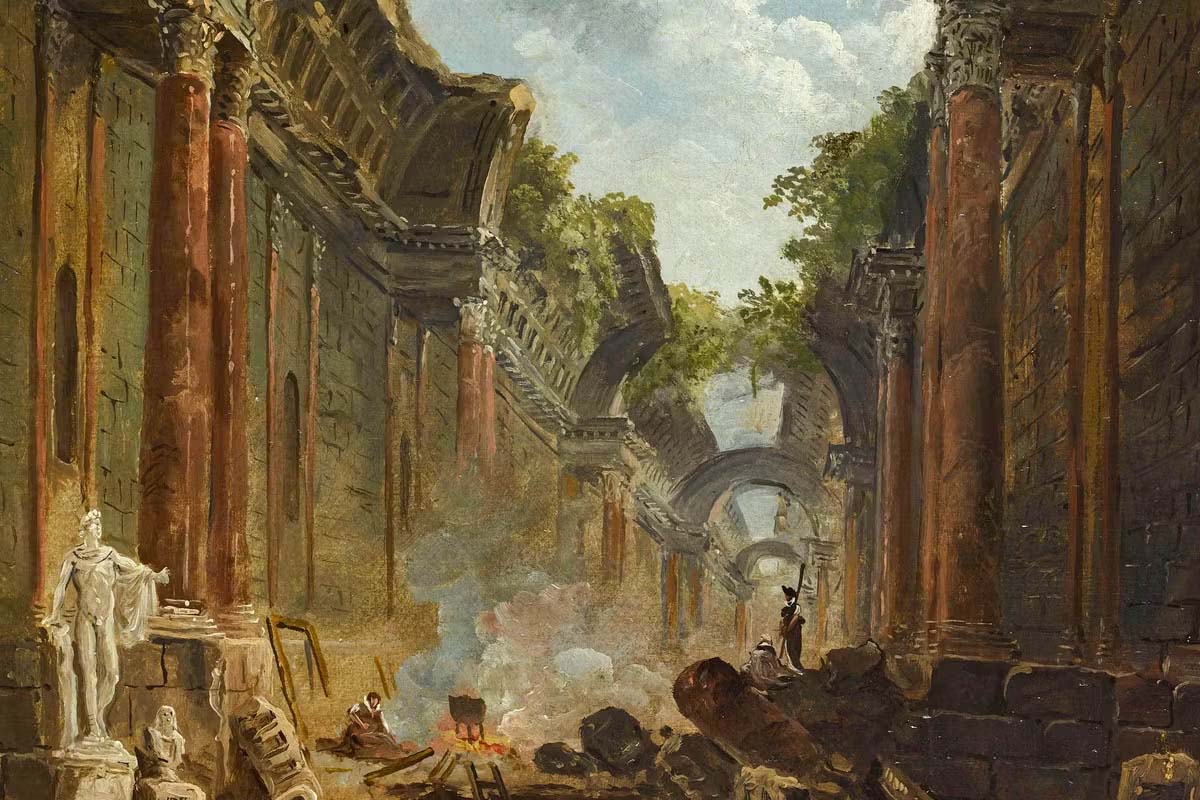
Painted in 1796, Hubert ROBERT’s painting shows the Louvre’s Grande Galerie in ruins in the distant future. Yet the painter did not change the fashions of the day
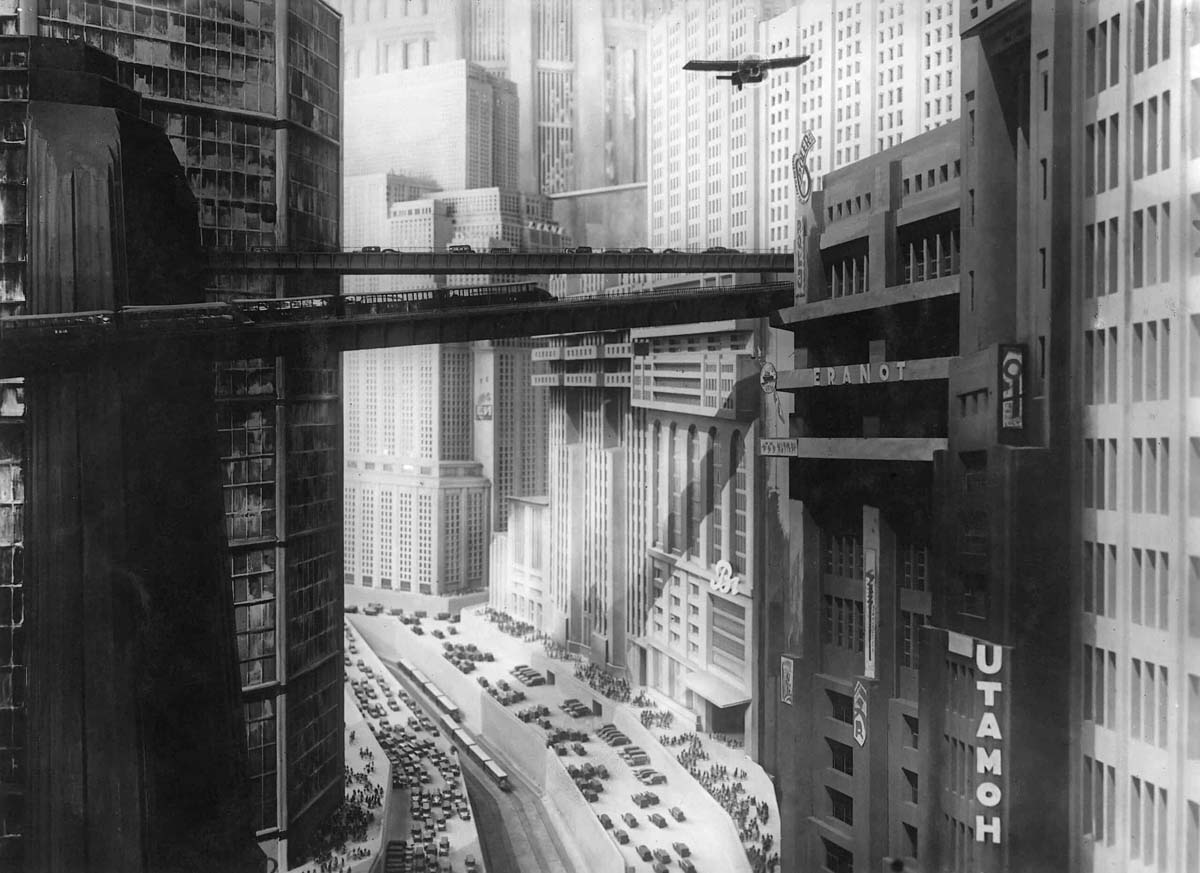
Fritz LANG’s film “Metropolis”, shot in 1927, depicts a city in 2026 in which, notably, all transport is organised quite differently.
For centuries, artists paid no attention to the existence of paths and roads, or to how deeply they changed with our access to energy.
They simply depicted them because they were before their eyes. They even used them extensively for their graphic power, which was a great help in composing a picture.
So they did not alter them, unlike the other elements of the painting, which they loaded with symbolism.
The Ny Carlsberg Glyptotek in Copenhagen held the exhibition “Born of everyday life”, centred on the famous Danish sculptor Kai Nielsen’s wish to bring naturalism to the world at the end of the 19th century:
“I want to make ‘naturalism’ known to the whole world. To take what is born of everyday life and confront it head-on with all the ‘-isms’. I have put ‘naturalism’ in inverted commas because it is simply impossible, but the point is to aim for the natural rather than drift with the current.”
From a letter to a Norwegian archaeologist friend.
The works, French ones in particular, were a perfect starting point for an archaeological study of open-air painting.
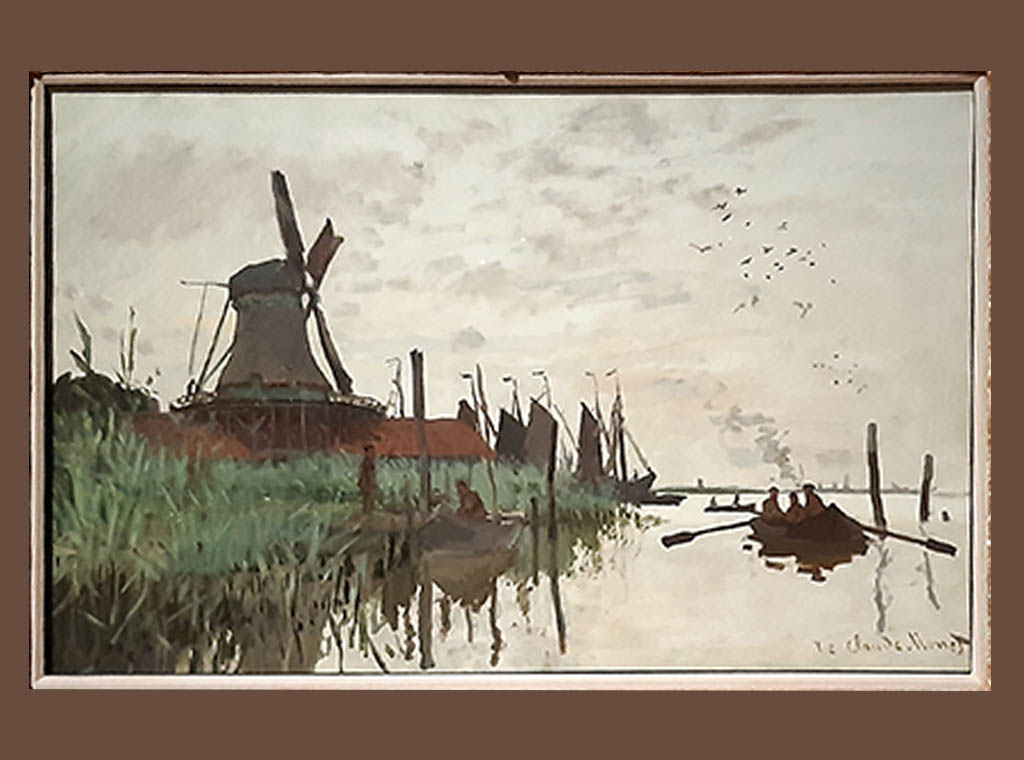
Claude Monet, 1871: Holland
No path here, as there are only canals and a leafy bank with jetties; but notice the rowing boat moved by muscle power, the sail, and in the distance (the future?) the smoke from a steamboat’s boiler.
Théodore Rousseau, 1829
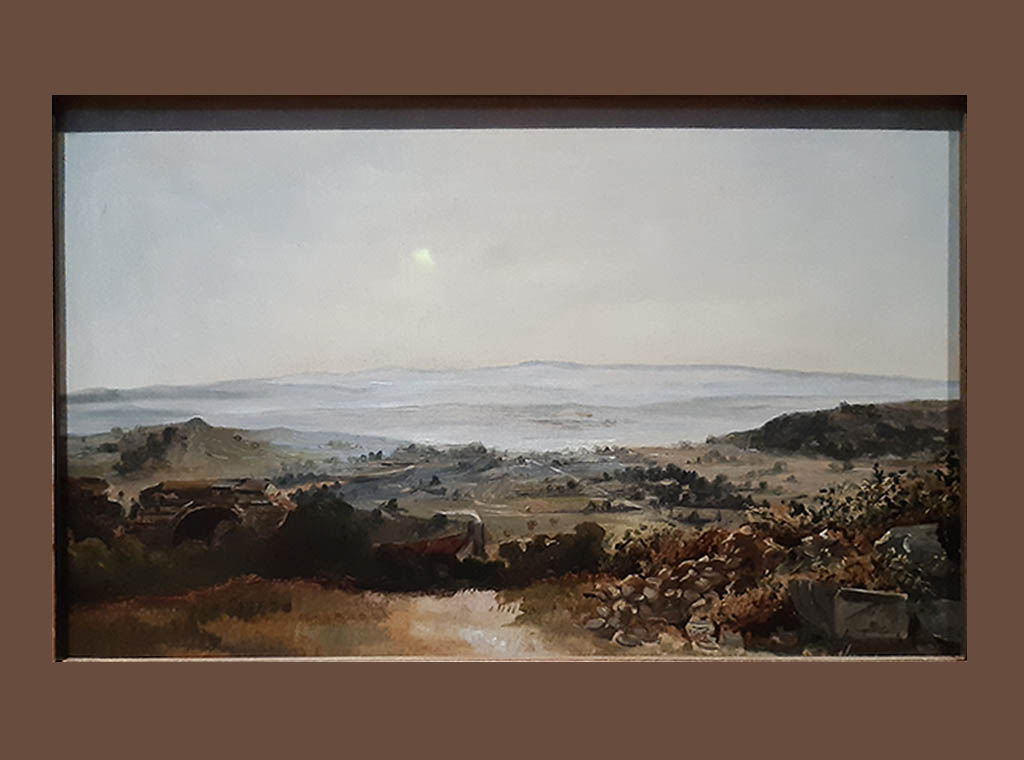
The path starts at the bottom right with a few stones, then a distinct light colour whose upper edge marks the end of the foreground, a change in level and a dip towards a wall behind which stand the house, its chimney and its smoke. Two diagonals: the right one is clearly a fairly important straight road, while the left one seems to lead to a sizeable river. This draws the eye towards the area with reflections (Lake Geneva?). Note the different shades of the fields or pastures around what may be a farm.
Jean-Baptiste Camille COROT, 1865
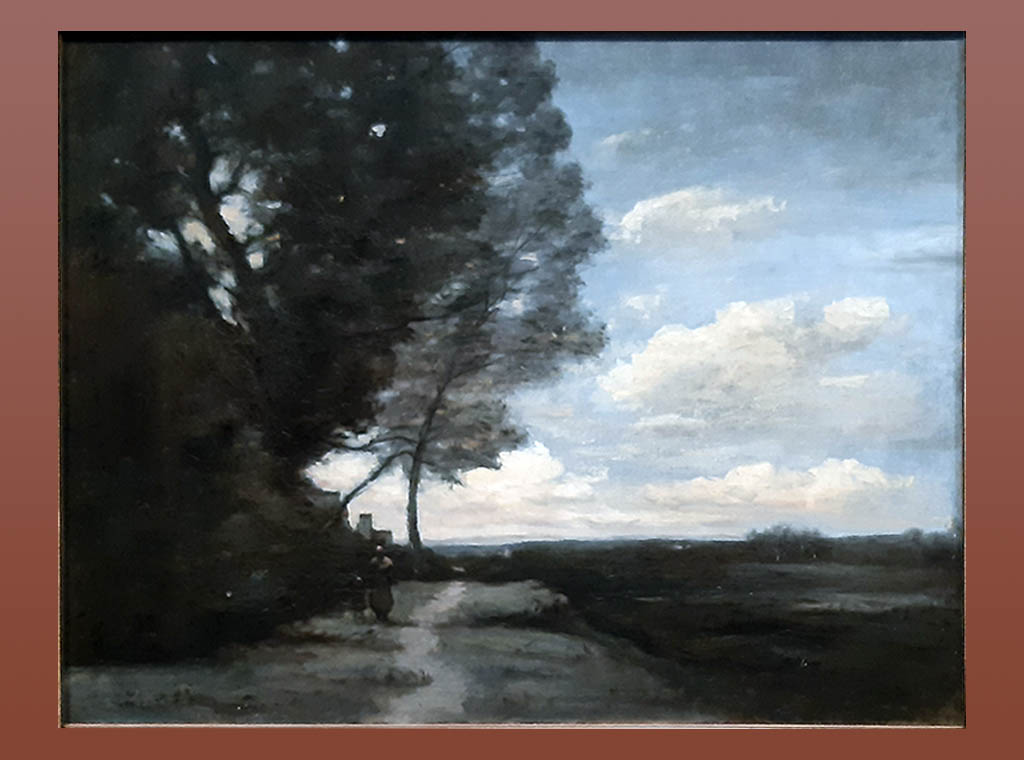
Soberly titled “The Path”, this one is not very wide and winds slightly, suggesting foot traffic only, towards the village (there is a bell tower on the left in the distance). Admire how the path reappears after the tree’s shadow. And what about the mother and child at the edge of the path? On the path, there was the promise that they would come towards us; on the edge, they are out of reach, static, ghostly.
Paul Gauguin, 1889
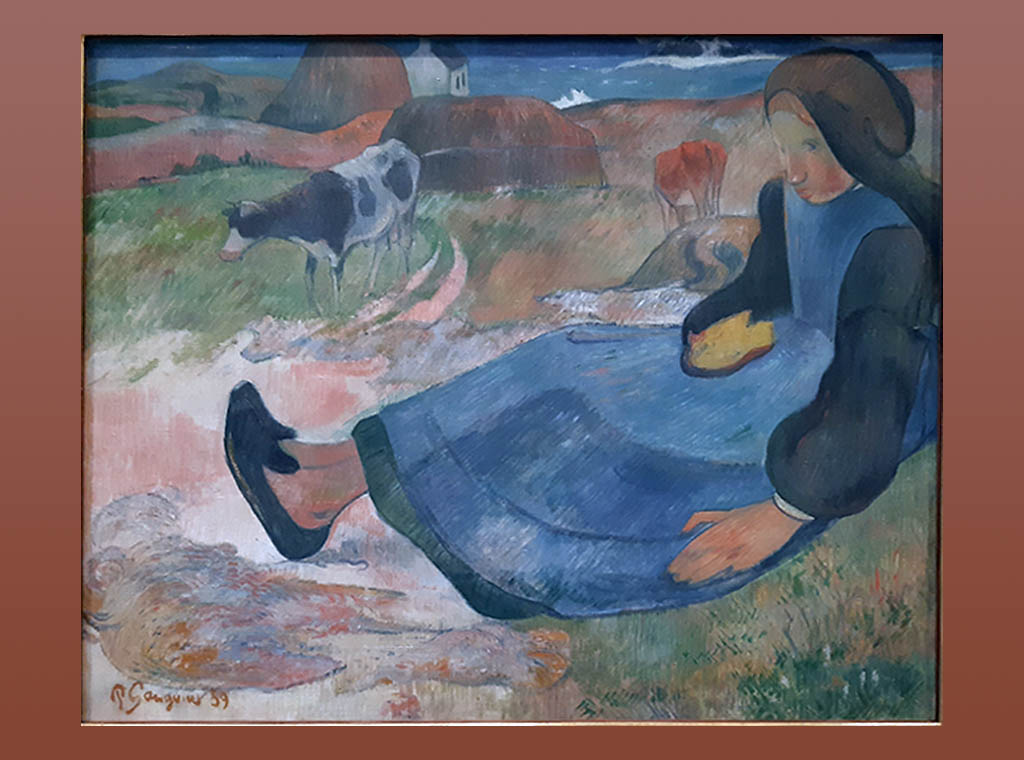
The young Breton woman sits along the beach with seaweed at her feet. It was gathered as fertiliser: you can clearly see the tracks of the two wheels of a narrow cart that has left its mark in the grass grazed by the cows. There are outcrops of granite but no other visible paths, reinforcing the wild character of the coast, with spray and foam in the distance.
Paul Gauguin, 1888
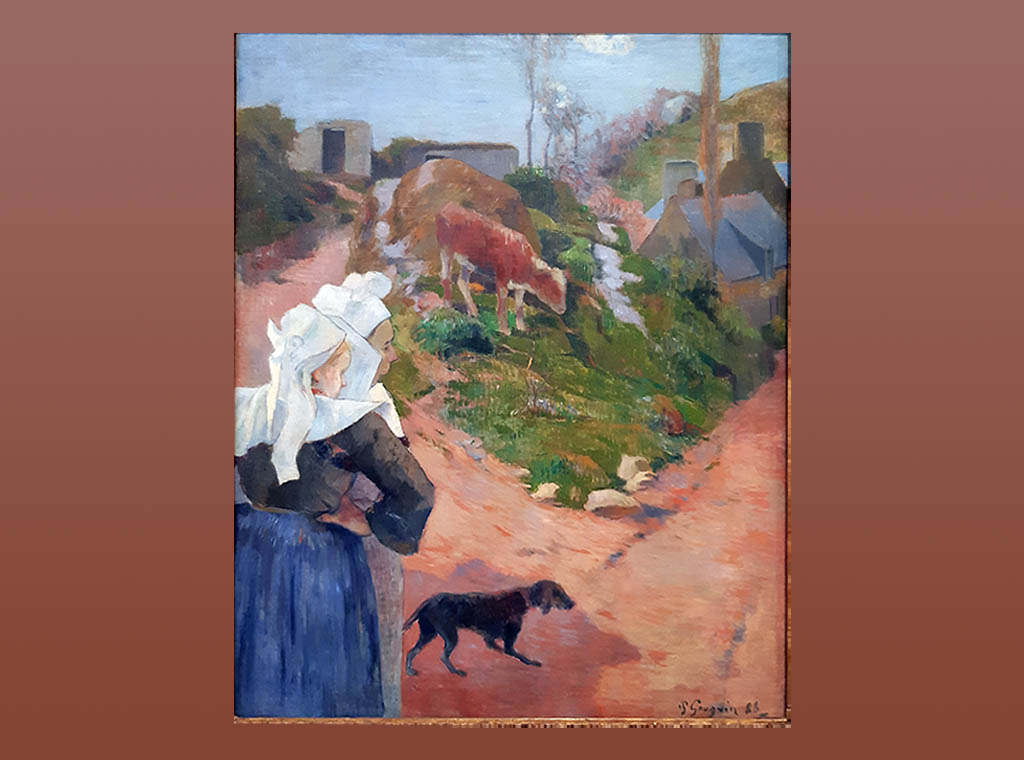
The Bigouden women seem to be scolding the dog for frightening the calf, which looks in trouble “straying from the right path”, alone on the slope. The path climbing on the left has been badly gullied by heavy rain; probably muddy for a long time and used only by animals, it has given way to a footpath that has exposed the granite on the right, along the visible rock. Only the flat path on the right shows parallel wheel tracks, surely from a bulky cart supplying the village.
Laurits Tuxen, 1890-1900 (?)
The Danish artist takes infinite care to reproduce the texture of the beaten-earth road. You can see a cracked area along the edges, like dried rain, because the road is clearly cambered, a sign of heavy traffic compacting the earth. Several heavy vehicles such as stagecoaches have passed, each leaving its own clear track, more visible on the outside of the bend than the inside, which also suggests a certain speed; they seem to have cut the corner slightly. The path appears to be the drive to the opulent residence of the bourgeois family.
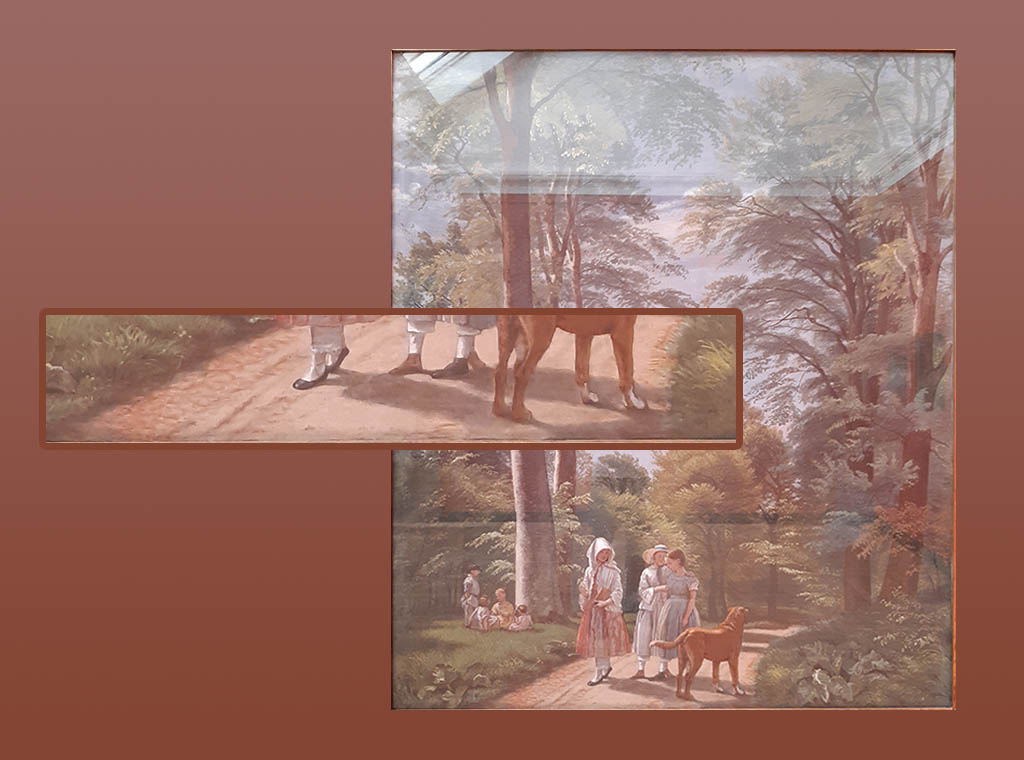
Paths and roads are thus markers of how the world has evolved.
Artists have left us the archaeological traces needed to study them.
The very strong link with energy, and therefore with Life, surely explains the importance given in language to “path/life” metaphors.
Discover the exhibition “Formes de la ruine” at the Musée des Beaux-Arts in Lyon, 2024
To follow this project, subscribe now to our two YouTube channels and be notified of new releases:
An opinion, an idea, an insight? Leave us a message
Every new adventure needs a manifesto:
“We declare our understanding that science lies at the heart of everything: art, behaviour and history. It must be the basis of all analysis.”